
When I say human cell, I mean the smallest unit in my body that still runs the core logic of life. In other words, I use the human cell as my starting point for understanding how my body works. Every tissue and every organ builds on cells. Therefore, I focus on what a human cell does every day. I keep it practical. I keep it clear. And I connect each idea to the bigger picture.
A human cell manages three main things at the same time. First, it separates inside from outside. It does that with the cell membrane. Second, it controls and organizes work. It does that mainly with the nucleus. Third, it runs production and reactions. It does that in the cytoplasm, together with many organelles. So, I see the human cell as a small but complete system.
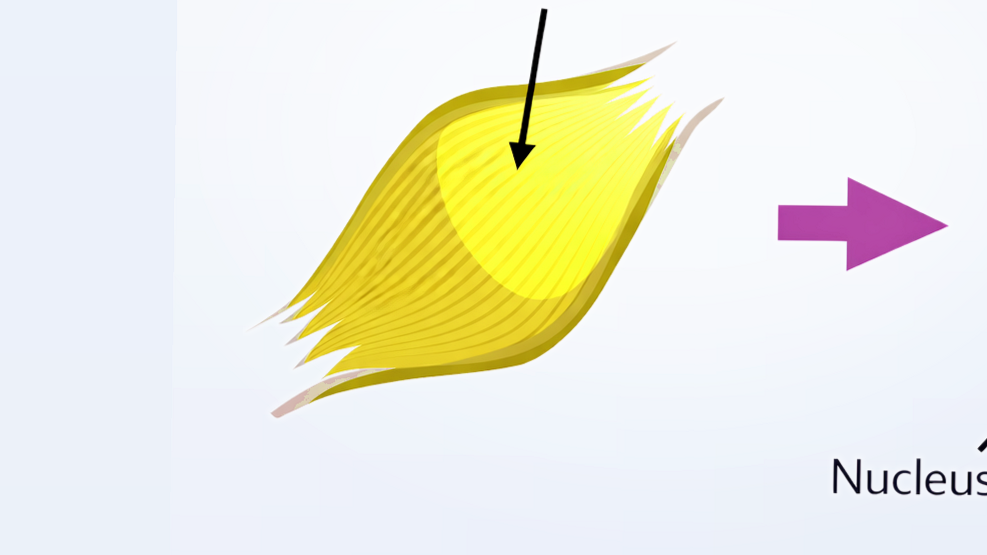
However, I also know that not every human cell looks the same. Cells specialize. For example, a muscle cell focuses on contraction. A nerve cell focuses on fast signaling. A liver cell focuses on chemical transformation and detox support. Still, these cells share the same basic blueprint. That is why I can explain many cell types with the same core model.
Next, I look at what every human cell must be able to do. A cell takes in substances. It needs water, ions, and nutrients. Then it processes substances. It uses chemical reactions to build molecules and to release energy. After that, it removes waste. It keeps its internal environment stable, because stability supports reliable function. In addition, a cell responds to signals. It reacts to hormones, messenger molecules, and mechanical inputs. Finally, many cells divide when the body needs replacement or growth. So, a human cell does not “just exist.” It constantly acts.
Because I want this glossary entry to stay safe and accurate, I stick to the context you provided. The text focuses on membrane, nucleus, cytoplasm, transport, energy use, signaling, and specialization. It does not go deep into extra details like specific metabolic pathways. Still, I can enrich the concept carefully. For instance, I can say that human cells coordinate with neighbors through signals. Therefore, a human cell rarely works alone in the body. It works as part of a tissue. It follows rules that keep the whole system stable.
Moreover, I use a simple mental checklist when I think about a human cell. I ask: What enters the cell? What leaves the cell? What signals reach the membrane? What decision does the nucleus support? What work happens in the cytoplasm? In this way, I avoid confusion. At the same time, I build strong intuition. So, when I read about organs and diseases later, I can trace many effects back to cellular basics.
In summary, I define a human cell as a living unit in the human body that uses a shared blueprint and adapts it for a specific job. It manages boundaries, information, production, transport, and communication. Therefore, it explains how the body functions from the bottom up.
« Back to Glossary Index